IT’S COLD AND RAINY IN GAZA: URGENT NEED FOR TENTS

From Aljazeera 12/10/25: According to earlier data from the media office, Gaza requires about 300,000 tents and prefabricated housing units to meet the most basic shelter needs of Palestinians after Israel destroyed infrastructure over two years of the genocidal war.

ONCE AGAIN, dear friends, we appeal to you for your financial generosity to support the efforts of Dr Jehad Hasanain in helping people of his community who have little or no financial resources.

YOUR FINANCIAL GENEROSITY HELPS DR. JEHAD HELP OTHERS.

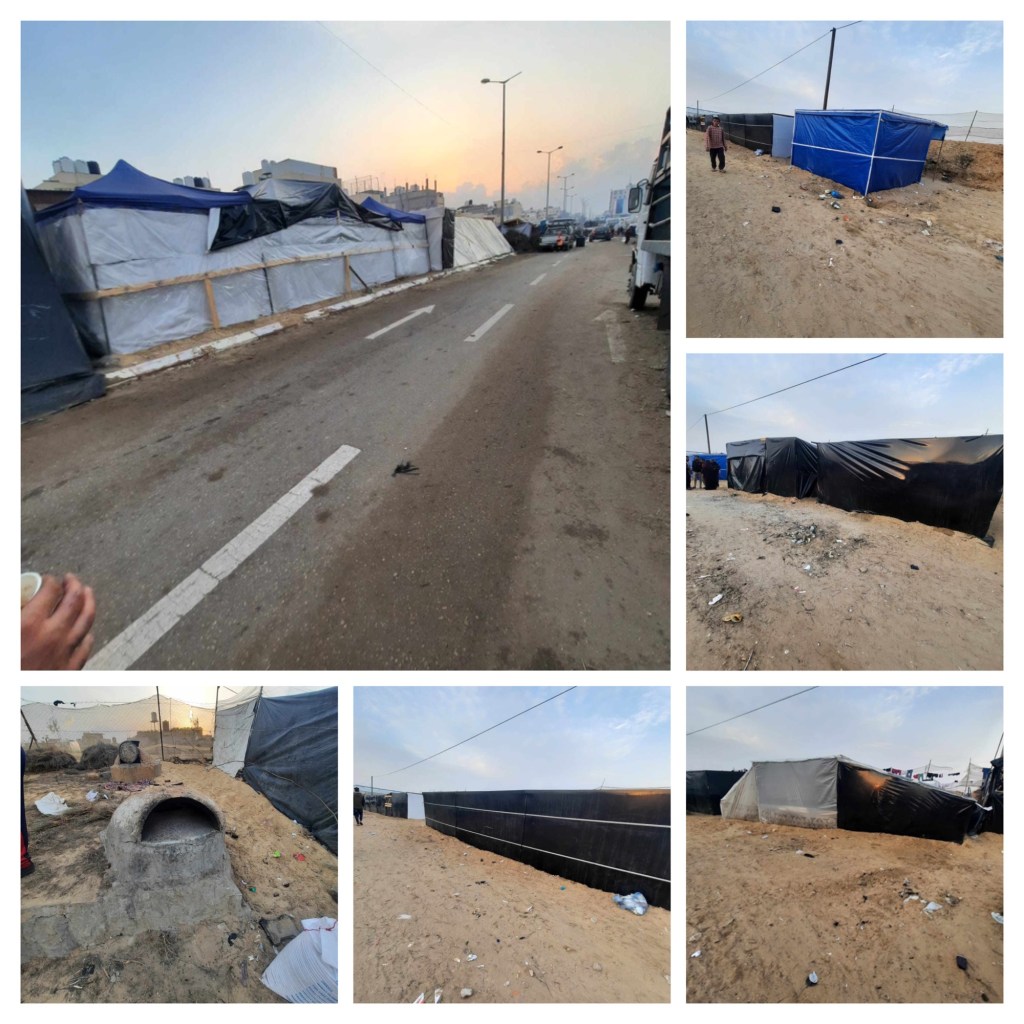
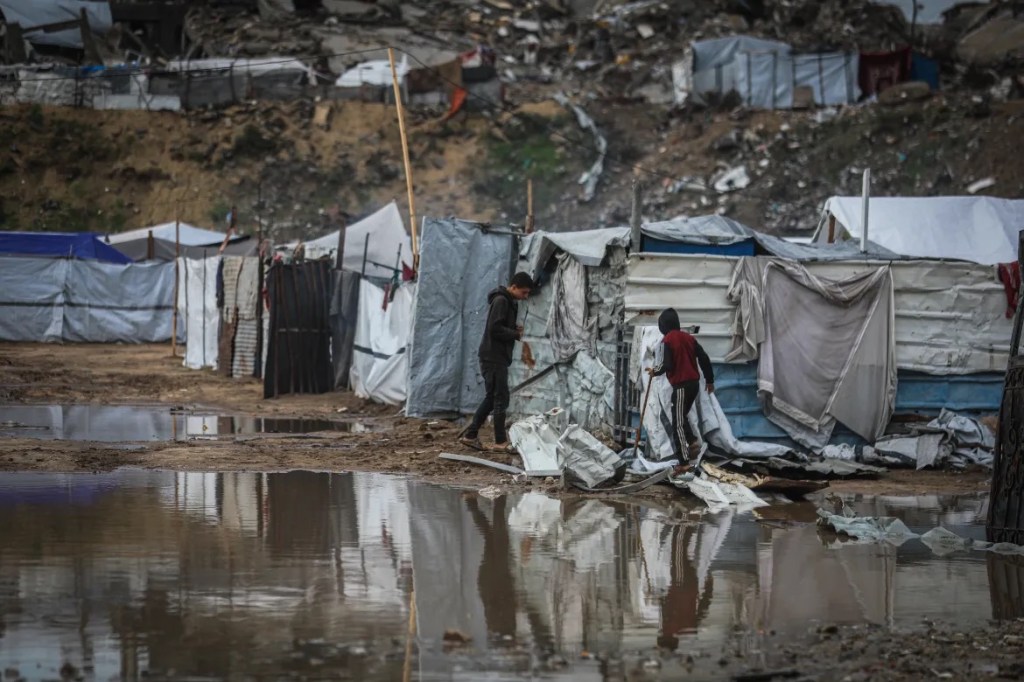
Winter has begun, and rain and cold besiege the people in Gaza. Many tents have deteriorated or are insufficient to protect them from the harsh conditions from which there is no escape.

Like many others displaced by the genocidal actions of Israel, Dr Jehad and his family are living in a tent community on a beach near Khan Younis. While he continues to work as a doctor and provide for his family, he also tends to the needs of the poorest in his community as best he can.

Messages from Dr Jehad:

12/8/2025 (When asked about the availability of tents)

…There are many trucks entering Gaza filled with tents, food and many other things. This is happening because there is an agreement to provide humanitarian aid to the people of Gaza.

Unfortunately, the tents are not being distributed fairly because there are no supervisory bodies and no government to monitor the situation.

Therefore, the tents are sold illegally on the black market, and the poor cannot afford to buy them.

There will be heavy rains in two days, which will flood the poor people’s worn-out tents, so we must help them as soon as possible.

I bought good tents and distributed them.

___________________

And on 12/11/2025 (After a day of hard rain and cold)

I cannot bear all this suffering and the cries of the people. People’s hearts are deeply wounded.

Like them, I thought that the suffering would end with the ceasefire. But unfortunately, dozens of disasters occur every day.

I finished my shift at the hospital yesterday and arrived home in the morning. I then went to help the camps next to me to provide assistance as much as I could.

I just got home. I feel exhausted from all the tears I’ve seen and the pleas and requests for help.

———————————-

From today: 12/16/2025

Last night in Gaza, the wind tore my tent apart,
and the rain drowned everything I had — clothes, blankets, even the little things I tried to save. Now I stand in the cold, searching for a new tent, a mattress, and dry blankets.
Everything we owned is soaked, useless in this harsh winter.

This is not just my story.
It’s the daily misery of thousands in Gaza,
living under fabric walls that cannot hold back storms, and skies that show no mercy.
We don’t sleep — we survive the night.
And when morning comes, we start again… for nothing!

In Gaza, we’ve moved past anger.
The rage we once felt toward the occupation has been buried under layers of grief, exhaustion, and endless loss. Now, all we fight for is the right to live — not with ease, but with dignity… to simply survive.

After all the death, destruction, and heartbreak this war has brought, we no longer scream — we endure. With patience. With shattered hands. With broken hearts.

We are tired.
Tired of setting up tents, stretching tarps, carrying mattresses and blankets for those who have nothing…only to watch the wind tear it all down, and the rain wash away every bit of our effort.

How do we keep helping, when even the sky works against us? How do we keep standing when the ground beneath us turns to mud and grief?

We don’t want revenge.
We want rest.
We want safety.
We want a life where we don’t have to rebuild from zero every single day.

Is that too much to ask?”

___________________

Dear Friends: For any amount you are able to donate, a deep bow of gratitude. ❤️

TO DONATE : www.healthylives-gaza.org (and CLICK ON THE RED HEART ) ❤️

Or send check: Sally Bowden-Schaible 27 Birchvale Dr Portland, ME 04102
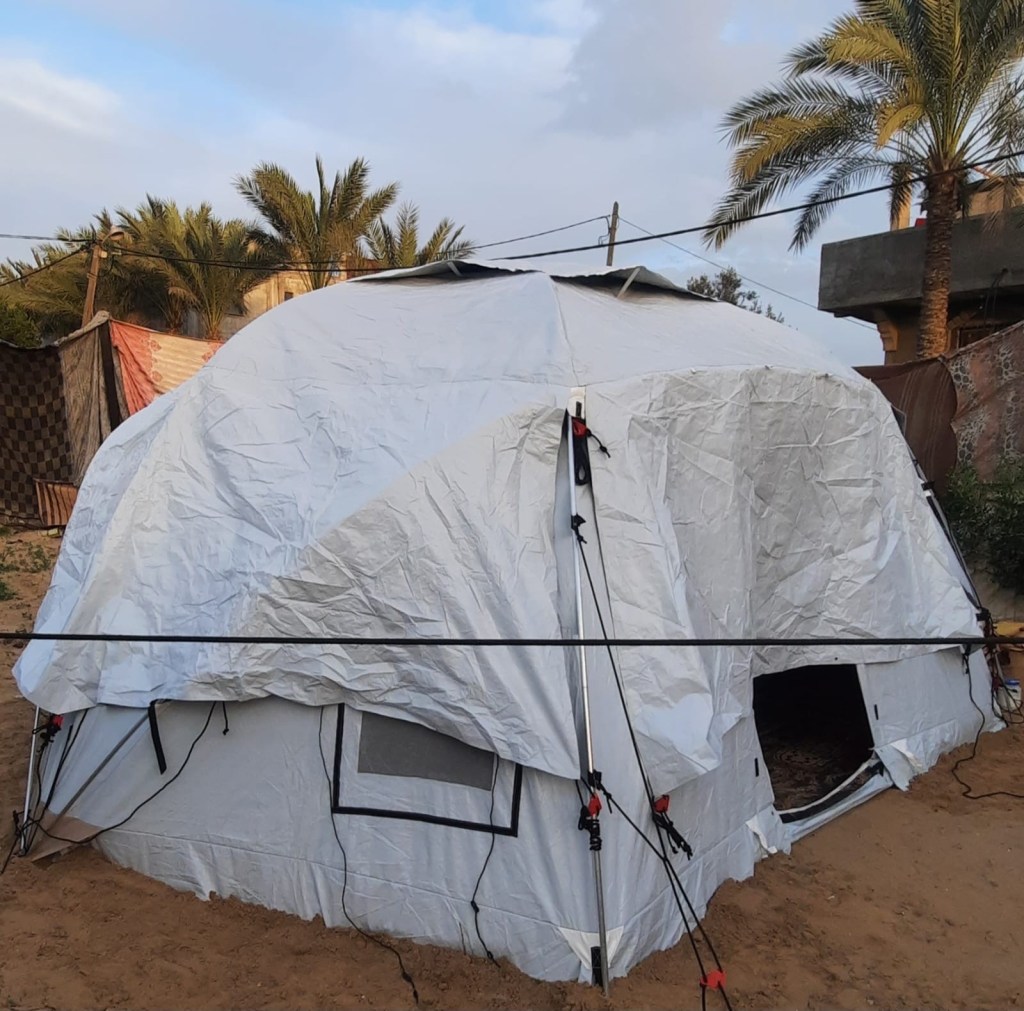
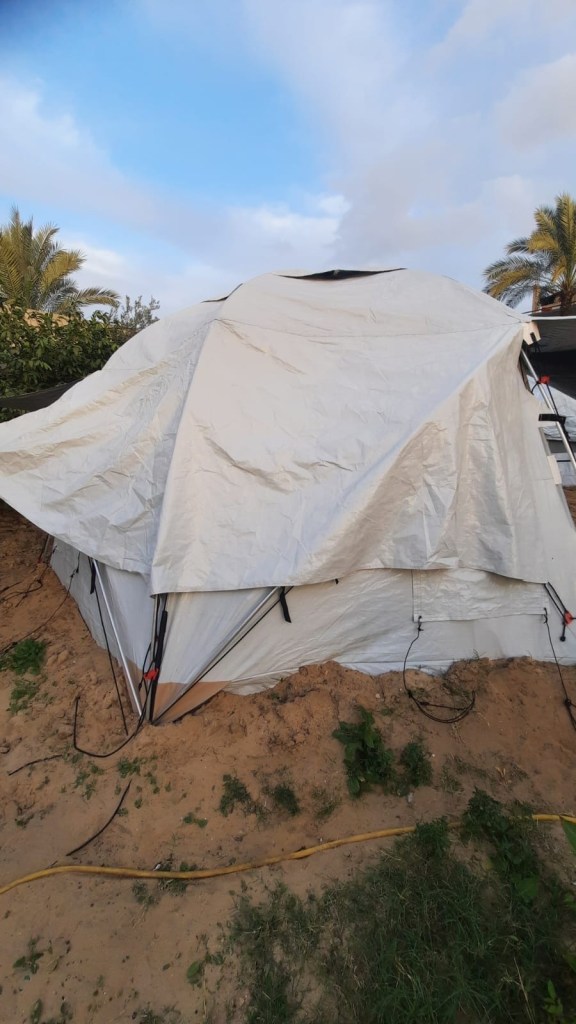
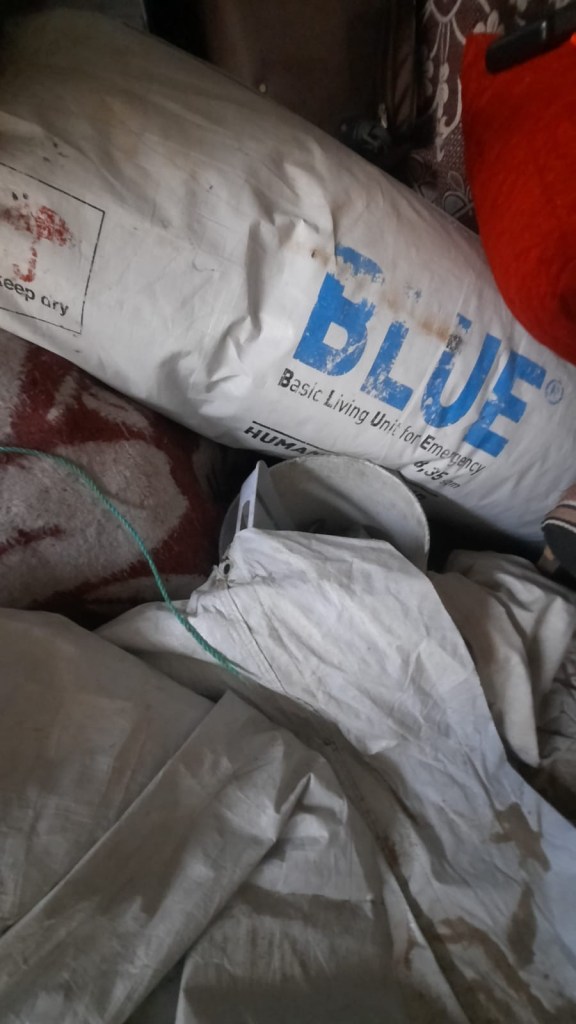
Tents purchased with your donations
Featured

“Sadness Set On Fire”

From an anonymously written poem, these words resonate for me like no other expression of grief I’ve come upon. “Sadness set on fire” is for me what is deep in my body, a swirling mess of sadness mixed with anger—a deep, pervasive, pressurized anguish. Except that during this year of genocide in plain sight, my body has done what the body tends to do— it has shut down, become desensitized to the sounds and images of horror. Tears won’t come, they just won’t. My eyes still see, my ears still hear, my mind still thinks, but then there is a block, a separation, a kind of door that keeps out or keeps in (depending on perspective) emotions felt as sensations in my body.

It is for protection, I have no doubt. Not unique to me. A way the (my) human body has adapted to mental and physical pain when the pain is experienced as too much to bear. Blocked, buried, suppressed until something, some unforeseen condition (a word, a smell, a picture…) unlocks the door, cracks it open, and the built up anguish pours out. Like in flash flooding, emotions when built up and then released have a way of being a muddy mess and a potential danger to what is downstream. A deluge of tears, screams of heartbreak, a pressure-cooked body all mushed together with unresolved traumas from long ago. There’s nothing clean about it.

This is trauma, a natural history of trauma. But what I experience is trauma from being witness to, not being in the direct path of, forces intent on destroying.

Now imagine this trauma:

Imagine tens of thousands of people corralled without exit, never knowing if you will be the target of a sniper, a drone programmed to execute, a bomb of shrapnel. Or knowing without doubt that food is being withheld from you, your children, your elderly mother. That you may starve or die from illnesses run rampant from garbage and sewage and buried corpses of dear friends and little children rotting into the ground. That winter is coming with its cold rain and harsh winds— that your tent may not be strong enough for the storms, that there are few blankets and even fewer layers of clothing warm enough to protect your already cold body. Imagine.

Imagine the faces—gray, stress-lined, old, skeletal. Eyes blank and staring, some encrusted with dirt mixed with dried tears or the pus of infection. Or young mothers with gnawing bellies, wasting bodies, and empty breasts, unable to feed their babies, and wracked with terrible guilt when their infant cannot survive. A vehicle for life, a vehicle for death.

My dear young friend, Dr Jehad Hasanain, is in the midst of all this human-caused suffering. He’s a survivor. He wonders for how long, though. How long can a human spirit survive even if a body does?

He recently wrote words that cracked open the door of my emotions. I read them out loud and I heard his voice through my own and I sobbed.

[From Dr Jehad— Sunday, November 17, 2024]

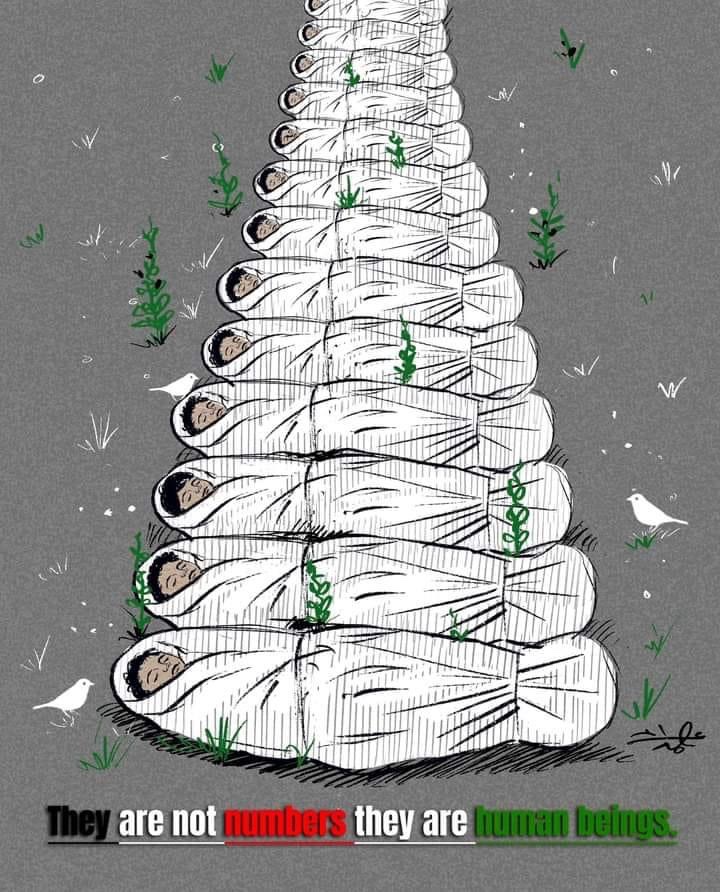
I don’t really know what this world wants from us. We are a people whose rights have been taken away for decades. We are trying in every way to live in peace. But this world refuses to listen to our voices, trying to crush us as if we are not human beings.  We feel, we dream, we hope.  We are not heroes and we are not criminals. We are just human beings!

My God, what have we come to? 

Do you know that people go to bed hungry?  It used to be the poor who complained of hunger. Now most of the people are poor and most of the people go to bed hungry. No flour! No bread, no vegetables, no tinned food, no fruit.  There are some very simple items available here and there, but at astronomical prices that no one can afford. 

The fatal thing is that there is no horizon!

There are no landmarks for the future. Everyone wants to open the crossings to escape the hell of Gaza.  That’s what we’ve come to. Our day in Gaza is full of shelling, bullets, tanks, planes, soldiers, searches, killing, blood, screams, pain, sadness, hunger, poverty and humiliation.

I don’t know what to say except that I’m tired. I’m tired of everything. I feel like many parts of me have died.  And I feel that my memory has been eaten by the war. I find it difficult to remember my former beautiful days.”

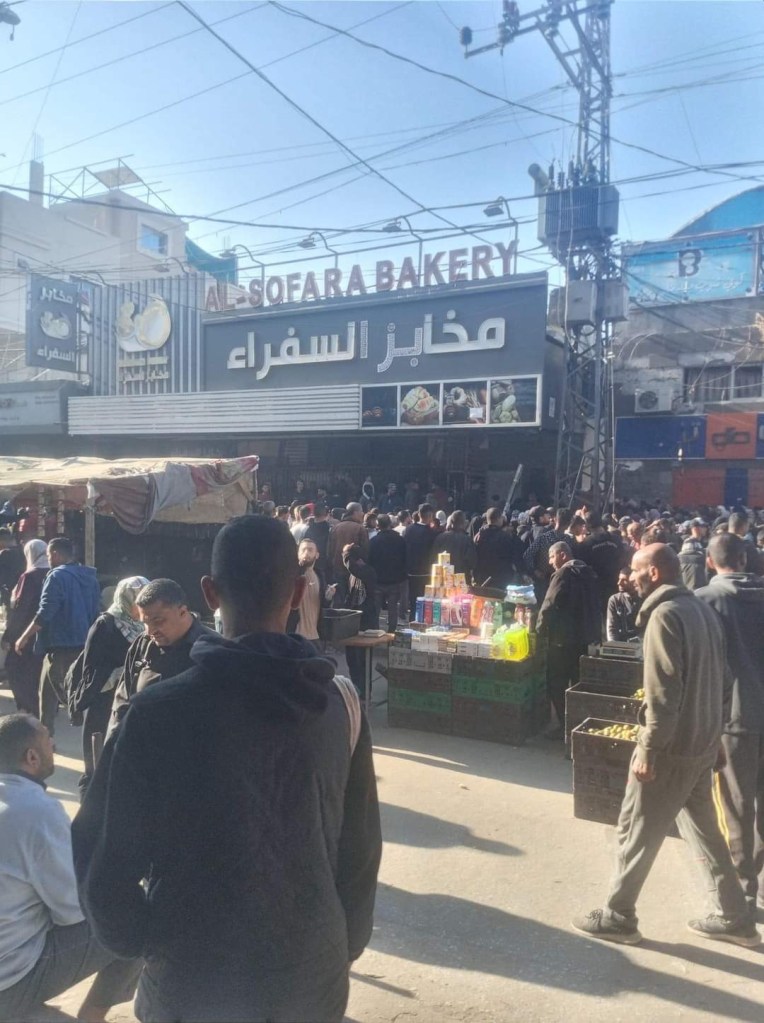
CROWDS OF PEOPLE TRYING TO GET BREAD

TENT DIARIES

By Dr. Jehad Hasanain

Those who live in tents. They have begun to feel strange pains creeping into them. Some of them are psychological. Others are physical. Or both.

Among these complaints, which are not the only ones. They have alternating pains in their kidneys. A complaint that is almost common among all of them. Some of them explained it as being due to the polluted water they drink every day. They get it with difficulty and in queues. Sometimes it tastes like diesel or oil. If you expose it to sunlight, you will see white or black objects swimming in it. Or its color tends to yellow. But there is nothing else. Everyone is forced to drink it. Otherwise, they will die of thirst.

Uncle Ibrahim, who lost his family in the north and was displaced for the fifth time to the Mawasi of Khan Yunis, told me that the reason for his kidney pain is the cold he is exposed to at dawn in his tent, which is only thirty meters from the beach. The cold is intense at dawn. The tent cannot prevent it. It also cannot prevent the heat of the sun, which turns the tent into an oven after eight in the morning and especially at noon. “Our bodies can no longer withstand all these fluctuations, my son. The fluctuations of temperature and weather. The fluctuations of politics and time. The fluctuations of war, hunger and poverty,” he told me.

Ahmed was lying on his right side next to his tent. Feeling his kidney with his left hand, he did not share his family’s lunch. (Three cans of peas from UNRWA, of poor taste. They were heated over firewood and poured into one plate.) He assured me that the cause of his kidney pain was not the cold. Rather, it was the preservatives in canned beans, peas, and other bad canned foods. He explained to me, in a quasi medical way, how after more than seven months of consumption, preservatives turn the body into an iron vessel that is susceptible to rust and melting. He told me this in pain. Our bodies have begun to melt and rust from the inside in this war. Preservatives are not only destroying our kidneys. They are destroying our hearts, livers, veins and all our organs. The kidney is just the tip of the iceberg. But with time, after the war ends, all the people in Gaza will collapse. The hospitals will not be able to accommodate them. People are forcing themselves to postpone their pain and their illness, their downfall. Those who were not killed by the bombing will die slowly from pollution, preservatives and psychological pain. This war has killed everyone living in Gaza. Either by quick killing or slow killing.

I left Ahmed imagining the people crowded around me and in the tents, iron vessels eaten away from the inside by rust, neglect, waiting, disregard and preservatives. Waiting for the moment of their final erosion and gradual collapse—which will not be sudden.

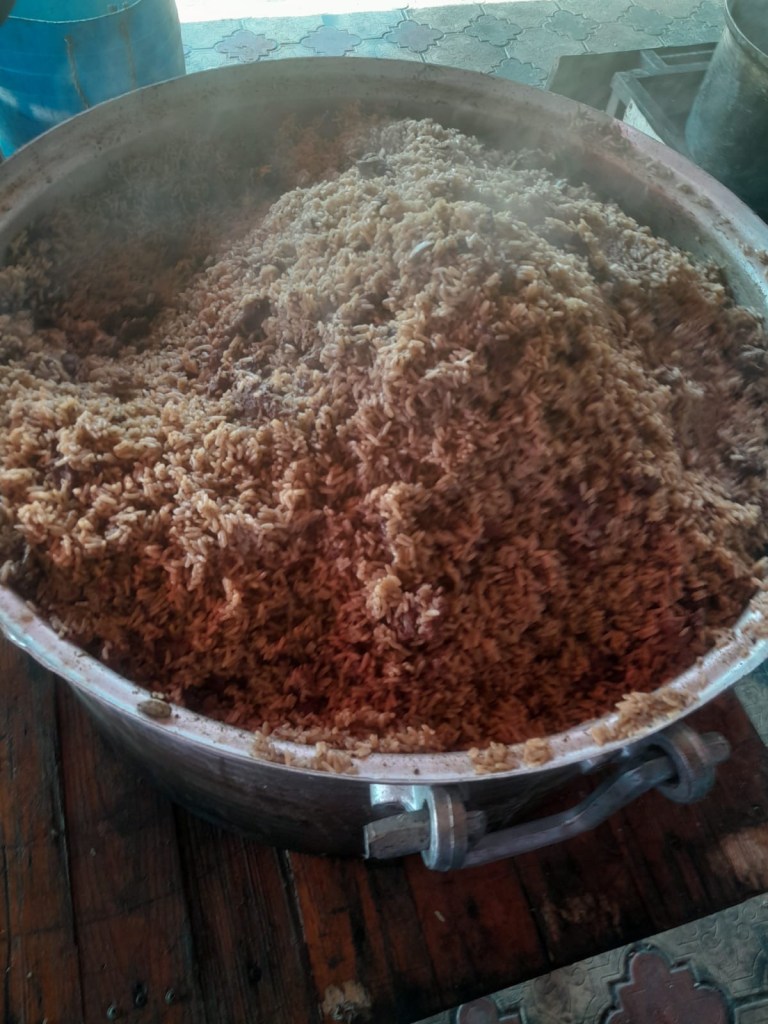
Canned food that is available being prepared.

Trapped: This is Life in Gaza

No way in— money transfers are blocked, as is humanitarian aid sufficient enough to provide adequate food, clean water, medical supplies and shelter. No way out—pushed to the south-most edge of the Gaza Strip, there is nowhere else to go.

For about three years, I’ve raised money for my dear friend Jehad, physician and humanitarian in Gaza, to provide food, clothing, blankets, shelter, medicines, school supplies, and transportation for medical procedures available only outside Gaza for impoverished children and their families. Through the generosity of friends (and their friends) I’ve been able to help Jehad fulfill his commitment to be of service to his beloved community, filling in the gaps with aid many would not have otherwise accessed. These children and their families are deeply grateful and their lives improved because of Jehad’s tireless efforts and because of your generous donations.

How was I able to get money to Jehad? Through PayPal. That is, up until about three weeks ago when Jehad’s PayPal account was “suspended” for 180 days.

A call to PayPal proved fruitless except for a couple of things— one of which was an encounter with a beautiful side of humanity; the other an explanation and an example of the permeating power nation-states have to exert their control, including ways that are dark, even sinister. We shouldn’t have been surprised.

Kim (made up name), a representative from PayPal, told me that if someone’s account was suspended for 180 days it actually means a permanent suspension. She explained that distribution of funds through PayPal was regulated by the specific country’s circumstances such as being at war. And that because Israel was “at war” (Israel’s view) it had the right to suspend accounts in Gaza — a non-sovereign territory without such authority. I explained to her how the money was being used.

Her voice, already soft, became even more gentle— and I heard sadness and then tears. She began telling me that she has no one to talk with about Gaza, that she was grateful to have this moment with me, someone who understood the suffering of the Palestinian people. She is Muslim and she is afraid. She is afraid to speak out. She is fearful for her children, and she is fearful of the hatred spreading in the world. She said several times how glad she was to talk with a person trying to do something to lessen the suffering. “I’m so sorry I cannot do anything for your friend” she said “but I teach my children not to hate, to be kind, to be generous, to be good people.”

Such a beautiful side of humanity, and an example of how one never knows where and when one will stumble upon this kind of unexpected beauty.

Nothing more to be done (I did, to no avail, call my congressional representative) except look for another way to get money to Jehad.

The next attempt at transferring money to Jehad was Western Union. But it, too, is not an option—the office in Rafah is closed, the man running the office intimidated by Israel’s messengers. So…we have now entered into the territory of cryptocurrency. Jehad has trusted friends who are guiding him in Rafah, while I am on a steep, obstacle-filled and mountain-like learning trek that is unavoidable since this seems to be the last option available to us for him to receive money to help people who are desperate.

We’ve had some success—but…

As we’ve heard in mainstream news, some of the food stuff coming into Gaza as aid is stolen from the trucks allowed to enter. Jehad tells me that when it is stolen, it is being stolen by desperate people. Oftentimes by starving, thirsty people (he doesn’t condemn them, has compassion for their desperation); sometimes by people who want to make money off of others’ suffering (“selfish people exist everywhere in the world,” he tells me—“sadly, here too”).

This is life in Gaza.

In times of bare-to-the-bone survival, even though aid is supposed to be free, Jehad buys what he can find to give to others most in need in an overwhelmingly needy and weakened Rafah: warm coats, blankets, thin mattresses to sleep on, a solar panel to charge phones and batteries for lights. And food: biscuits supplemented with vitamins, more than 30 cans of food—confiscated aid bought and distributed for free by Jehad.

Hunger couldn’t care less the source of its relief.

A few days back, he negotiated with a farmer for a reduction in cost of vegetables. He explained to the farmer his intent to give the food away for free to those without money to buy it. He and the farmer put together vegetable packets, enough for about 35 families.

This is life for my dear friend, Jehad, who trembles with fear when he hears bombs falling but tries to stay strong for his family, who comforts his crying little daughter with the early gift of an apple he brought home from a market as a surprise treat for the next day. She loved the apple, smiled at her beloved papa—but still she was afraid, still she cried.

Terror is deep here in Rafah. It is reinforced bomb by bomb, by threats of imminent attack by Israeli troops moving south, by deepening hunger and thirst and cold and sickness. It is reinforced by days unfolding into months of pleas for help being ignored.

Hear the screams and cries permeating the dark. Nowhere to go that is safe. Trapped.

This is life in Gaza.

Artist, Esstar Omar

A Voice From Gaza: “We Will Come Back Someday.”

Night black, shining wet street, small container fires blazing on the periphery surrounded by men warming their hands, the occasional headlights of an oncoming car. These are the images I see as my dear friend Jehad walks along a street in Rafah heading to the little hospital where he is now working as a physician. He describes the misery of living in the cold and rain with little to shelter people from the wintry conditions now plaguing Gaza—an additional assault on those who are displaced and homeless from the genocidal acts of Israel.

Amidst the despair, however, there is also a spirit of resilience and faith. Feel the words from Jehad as his act of generosity fills his heart, an example of how living for the benefit of others benefits oneself.

Here are excerpts from messages I’ve received these past couple of days: (edited for clarity)

[Last night] was one of coldest nights ever.
I had to go out in the middle of the night to help people repair the handmade tents because they were partially destroyed.
I went to a group of associations and asked them for covers and blankets
I distributed them to families whose bodies were shivering from the cold and rain.
Oh my God, how cruel this life is! [It is] terrible! I swear by everything, since its inception [the Zionist establishment of Israel], Palestinians have never witnessed such humiliation, weakness, killing and displacement. We will not forget all who let us down.

From today:

This situation happened to me today—
Four trucks carrying aid passed, loaded with mattresses and tents.
Masked police intimidate people with weapons as they guard the jeeps.
All the people are standing there preparing to attack it and take aid from it. [They are desperate.]
A mattress from one of the trucks fell at my feet, so I caught it.
Then one of the people came to me and told me that his mother is sick and sleeps on the floor. She does not have a mattress to sleep on.
So I went to their tent and greeted his mother, kissed her hand, and gave it to her.
Oh my God, if you saw her smile!
I forgot all the sadness I’m going through now!
Our people are good and generous and are not accustomed to all this humiliation. We will come back someday
.

So many lessons I am learning from my dear young friend, Jehad. In his lifetime, he has seen more human-made suffering than most of us can even imagine. And the travesty is that we are watching it happen, in real time, before our eyes. A genocide— initiated, perpetrated and supported by supremicist, colonizing forces with greedy geopolitical interests— unfolds before us. The people in power abuse and humiliate without conscience. And just as implicated are people who do not want to see, so close their eyes and turn away.

One act a day matters: a call to a political representative, a conversation with a friend, a letter to the paper, a “share” on social media with information about the situation, showing up at a rally. Let others know you care— support others in what they are doing.

I know it matters to me. But even more importantly, it matters to Jehad, and to all the Palestinian people from Gaza to the West Bank to the diaspora spread throughout the world. It also matters to Jews who value Judaism and its teachings and who know, too, that dehumanization, a sense of separation, and the ignorance underlying such Zionist attitudes and actions are dangerously unwise.

What do you feel when you hear these words? It is cold and raining. My mother is sick and has nothing but the cold, damp ground to sleep on. Imagine this mother as your mother.

Please… if they’re not already open, open your eyes, your heart, your mind— Be courageous, be strong, do not turn away. Take action.

Banner created by Artists’ Rapid Response Team (ARRT)

Urgent need: Fundraising Appeal for Gaza—Healthy Lives for All

Dear Friends—

I’m reaching out once again because the need for support in Gaza is great, becoming greater with each passing day—and there is no end in sight. Since my appeal in December, the number of deaths of Palestinians has increased to over 22,000 (an estimated 70% are women and children) over 58,000 have been injured and about 8,000 more are reported missing and are most likely dead. People are facing starvation, infections, and infectious diseases that are more likely to occur under the conditions of a devastated environment: decaying corpses (human and animal), unclean water, inability to wash, open sewage and open trash disposal with no sanitation treatment available, and so on.

And then, there are the effects of trauma—psychological as well as physical—that will be experienced well beyond the end of this war into future generations. (The casualties of this war also extend to non-human lives which have been obliterated throughout the Gaza Strip by thousands of bombs dropped and the bulldozing of the land.)

I’m in daily contact with my dear friend, Dr Jehad Hasanain, a physician and humanitarian who is, like all people in Gaza, trying to survive each day while managing his and his family’s need for food, water, medicines, and shelter, and while going to the nearby hospital to provide medical care for sick and injured people.  At the same time, Dr Jehad is doing all he can to continue his humanitarian actions in Rafah. 

Thus far, he has (with donations received) purchased materials for tents, purchased ingredients for food (soups and stews), and provided medicines (antibiotics and immune supporting supplements).  All of this has been made possible from your generosity.  All of the money you contribute (except for PayPal fees) has gone directly to Dr Jehad to do what he can for others in his community, when he can safely do so.  It is all deeply appreciated and has allowed many people to live with a bit more security and a bit less suffering.   

Here are recent words from Jehad (written here with his permission):


Life has become figuratively black
Dreams are over
People with dreams and ambitions have died or suffered injuries that prevent them from achieving their dreams
The children’s future is unknown
Schools, mosques and nurseries were destroyed
The sky is full of smoke, bombs and planes
The food is black from too much smoke
Cars run on cooking oil
Hospitals are completely or partially destroyed
The smell of blood and death is everywhere
Martyrs are buried in the streets, on the sidewalks, and in the courtyards of homes
The children are dirty and their clothes are not washed
They haven’t showered for months
Life is very, very, very difficult


All of life is precious. And, all people, regardless of their identities, should have the opportunity to live with dignity and with the safety and security necessary to have a good life. For the Palestinian people living in Gaza, the foundation upon which to build a good life has been destroyed—literally.

Please consider giving to “Healthy Lives for All” www.healthylives-gaza.org (just CLICK ON THE RED HEART located throughout the webpage to donate)

THE NEED IS URGENT and any amount you give is deeply appreciated!  

On behalf of Dr. Jehad and with love and deep gratitude,

Sally Bowden-Schaible

Fred Mollon

ABOUT DR JEHAD and HEALTHY LIVES FOR ALL:

Dr Jehad Hasanain is a physician from Rafah, located on Gaza’s border with Egypt. He works at European Gaza Hospital (EGH) in Khan Younis, south of Gaza City. He has worked, too, at Abu Yosuif, Al Najjar, Al Shifaa, Al Rantessi, and Al Aqsa hospitals and at many primary health care centers in Gaza. He is the devoted father of three girls, ages 3 to 7.  For many years, Dr Jehad has given unwavering support to impoverished children and their families who are in desperate need for assistance:  medicines, surgical procedures, warm clothing, repairs to damaged shelters needed for protection from the rain and cold.  

I (Sally) joined him in 2021 (Warmth for All) to help him in fundraising.  Healthy Lives for All is the project that continues our fundraising efforts. 

This year, we are joined by Fred Mollon, a dear friend of Dr. Jehad’s, who lived for seven years in the West Bank—the last two years of which were during the first intifada, witnessing the brutality of the occupation forces against his friends and their families.

PHOTOS OF TENTS CONSTRUCTED WITH SUPPLIES FROM DONATIONS TO DR. JEHAD AND FOOD PROVIDED (photos by Dr Jehad)

Food being prepared with ingredients made possible by donations to Healthy Lives for All
Tents made with materials purchased through donations given to Healthy Lives for All

“…Justice will take us millions of intricate moves.” Wm Stafford

www.banvahr.org
banvahr@gmail.com
https://www.facebook.com/banvahr/

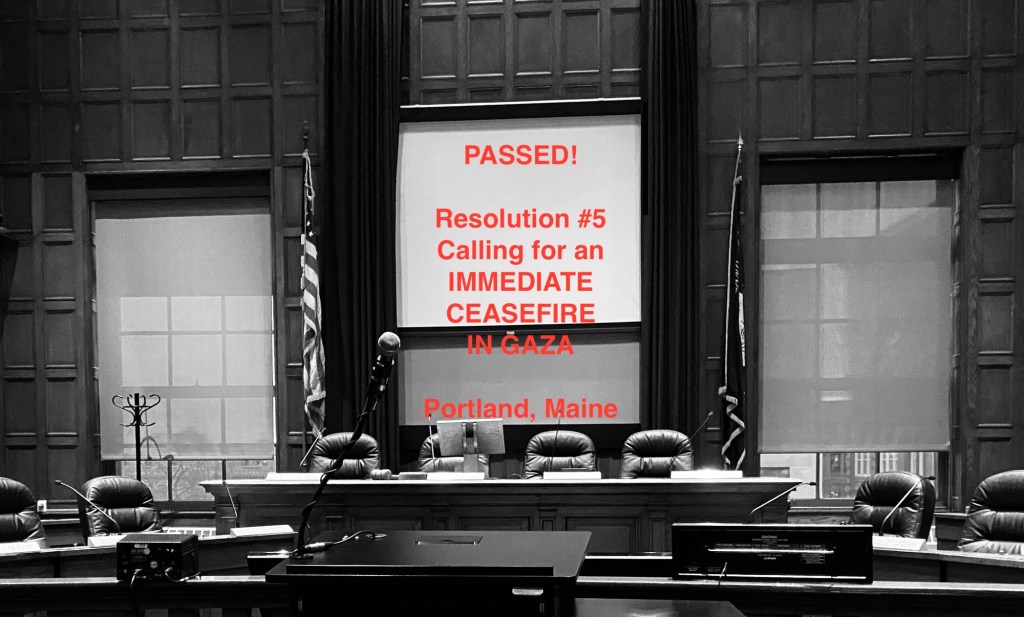
Resolution #5: CALL FOR IMMEDIATE CEASEFIRE IN GAZA–Portland, ME

In a packed City Council chamber, statements were heard from 40 or more Portland, Maine citizens supporting passage of Resolution #5 calling for an IMMEDIATE CEASEFIRE IN GAZA. (forward 1.31 hours into meeting) Amendments were added for immediate humanitarian aid to be allowed into Gaza and for the unconditional release of the hostages.

The Portland City Council vote (9 members, including the mayor) supporting the resolution was UNANIMOUS. As statements were made, it was clear that people who spoke (mostly young, several identifying as Jewish) were supporting the good of humanity as they advocated for immediate ceasefire in Gaza and recognition of Palestinians as human beings experiencing a genocide. 

I continue to be in awe of this younger generation (I’m in my late 60’s). Their knowledge, organizational abilities, articulateness, and moral courage to step onto a different path from previous generations is powerful AND hopeful. We are seeing here in our city and state, throughout the country and across the world a ground-up movement. I find myself wondering if we are witnessing the emergence of a Buddha or Jesus — not in one wise and charasmatic person, but in a community of wise and charasmatic leaders. We are being taught a new way of leading—a leading together in a less hierarchical, more diverse and inclusive way. Calling out the history of colonialism and white supremacy, the Western world’s profound sense of superiority, and the historic use of military means to intimidate, destroy, occupy and exploit, the voices of these young people are loud. Their message is pointed and consistent: “For the sake of humanity and all beings, STOP. We must live in a different way.”

What happens in the Holy Land affects what happens throughout the world. And, conversely, what happens here— in municipal council chambers, in classrooms, churches, on the street and in coffee houses—affects what happens in the Holy Land. We are all connected, and all action (of thought, speech, body) affects what unfolds. In other words, all action (or inaction) matters.

We need to be patient, diligent, and steadfast in our efforts. This is where faith comes in… having faith in the unfolding over time.  If we act for the benefit of the whole (as best we can); if we are guided by the intention to do no harm; and if we bring the virtues of kindness, compassion, and generosity into our daily lives as we interact with others, perhaps our children and grandchildren, all the creatures of the earth, and the earth itself will experience a life on this planet about which the wisest among us have always dreamed.  

The unanimous vote supporting Resolution #5 calling for an Immediate Ceasefire in Gaza was a step in this faithful work– on behalf of all beings everywhere, those alive now, and those yet to be born. As poet William Stafford wrote in his poem Thinking for Berky, “…justice will take us millions of intricate moves.” May such steps continue.

Question What You Are Told

Perhaps you will object to what I am about to say, but I think understanding from a “felt” place allows us to feel empathy for others. So bear with me.

Here in Maine, many of us have gone through 3 very difficult days due to the mass killings in Lewiston— sadness for the loss of lives (18 people), and fear knowing the shooter was still somewhere out there.

Across the ocean there is another tragedy occurring where thousands of innocent people have been killed, including over 3,000 children. The sadness is deep for the loss of sons, daughters, husbands, wives, grandparents, aunts , uncles, cousins, friends. The fear is intense and unrelenting— people pushed out of their homes with nowhere to go that is safe. They plea to be heard; plea for the nightmare to stop—bombs falling on places they thought would be safe: schools, hospitals, churches. Food, clean water, fuel, medical supplies are nearly gone.

Response was quick, support made available, and non-stop efforts to find the perpetrator of the violence were put into place — tonight he was found, we are safe, and there is again a national call to ban assault weapons —President Biden taking the lead for the ban. Violence seen for what it is — a tragedy.

No one is coming to their rescue, no one who has decision-making power is trying to prevent the violence. More weapons are being given, more bombs are being dropped, ground troops are preparing to attack. President Biden is taking the lead in supporting Israel. Our leaders are unreservedly supporting those doing the killing. Self-defense they say.

Now from Gaza, no photos, no emails, no texts —no internet. Cut off from the rest of the world. The message is —we don’t want to ignite resistance to the plan. Don’t want the world to sympathize with the injured, dying, dead. Don’t want you to see the shaking babies, the crying children, the devastated mothers, the wasteland that is vast and growing.

This response couldn’t be more different than what we’ve just experienced here in Maine.

What will it take for us to “feel” into the truth? Palestinians are human beings just like we are. Their children are just as precious as my children and your children. What will it take for our eyes to open, our hearts to open— to truly understand that it is our duty as human beings to take care of one another— we are brothers and sisters.

And we should question. Question. Not assume what we are being told by our leaders is true. Because sometimes they don’t tell the truth. They certainly are NOT telling you the truth regarding the Palestinian people and Israel.

Please … question what you are being told.

3,000 children? Whether here or somewhere else, violence used to kill children is a tragedy. It’s a tragedy that needs to end.

Photo from FB post

“Why Are You Here?

October 22, 2023

Since the eruption of hostilities between Hamas and Israel on October 7th, several rallies and vigils have been held in Portland, Maine. We are standing in solidarity with others throughout the world to demand that Israel cease its attacks on Gaza and allow lifesaving supplies to enter through the Rafah Crossing which borders Egypt.

We demand that the US end its unconditional support of and financial aid to Israel and hold Israel accountable for its criminal actions against the Palestinian people over the last 75 years, including its life-strangling siege of Gaza these last 16 years.

My social media has been filled with desperate pleas for help from Palestinian friends accompanied by deeply disturbing images of injured and dead children, their grieving parents, and exhausted medical and rescue workers.

Food, water, medical necessities and fuel are quickly running out. If not directly killed from the bombings, many people are at risk of dying from illness and lack of life saving basic supplies.

As of today, UNRWA* reports 4,385 Palestinian people have been killed since October 7th including 1,756 children and 967 women; 13,561 persons have been injured; nearly a million people are displaced from their homes. In the West Bank, tensions are mounting and the number of Palestinians killed by Israeli forces or settlers during this same time period is 90, including 27 children. Without question, this is genocide. And the world is watching the horror unfold day-by-day.

To be clear— the loss, too, of Israeli lives (1400) and the abduction of 210 Israeli citizens are horrific. But how Israel is responding is grossly disproportionate and unconscionable —It is retaliatory collective punishment and illegal by international law.

Important to remember is how this horror could even have happened. A 16-year siege punctuated by violent attacks, ongoing deprivation, and dehumanizing treatment by Israel have created life-denying, hopeless conditions for Palestinians living in Gaza. Such conditions breed despair and from despair, acts of desperation.

It is crucial that this context be understood and broad and deep systemic changes in the Holy Land (political, social, economic, etc) be made once this crisis is over so that such a tragedy as is happening right now never happens again.

However, before any systemic change can happen, the killing and displacement of Palestinians must end and the hostages must be released unharmed. Both must happen—now.

At a rally last week, I asked a few participants “why are you here?” Please listen to their responses.

*https://www.unrwa.org/resources/reports/unrwa-situation-report-11-gaza-strip-and-west-bank-including-east-jerusalem

http://www.haaretz.com / October 22, 2023 Amos Harel and Jack Khoury